Afyon 14°C
Hafif Yağmurlu
Afyon
14°C
Hafif Yağmurlu
Per 16°C
Cum 11°C
Cts 12°C
Paz 10°C
Content
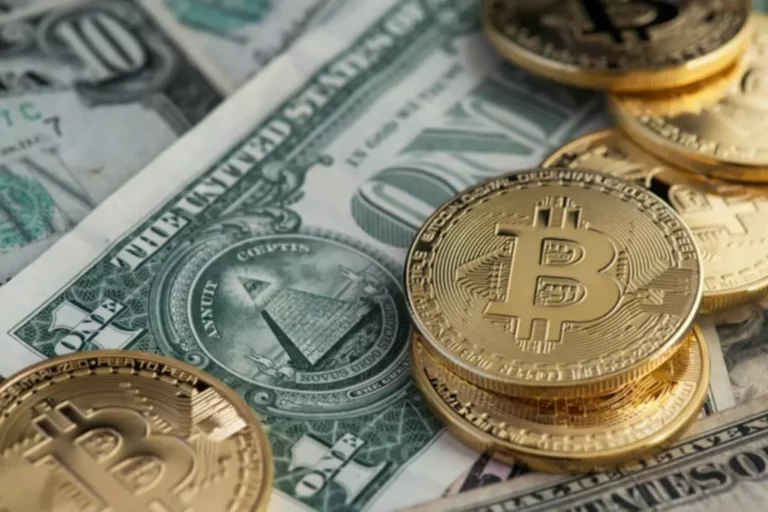
The dollar index rises when the US dollar gains strength compared to the other currencies in the basket and falls when the dollar weakens. By trading with FOREX.com you will have access to our exclusive trading tools. These can help you make better decisions, based on your past performance, as well as how prices are moving in certain markets. Volatility in forex is a measure of the frequency and extent of changes in forex volatility the value of a currency. A currency can be described as high volatility or low volatility depending on how much its value deviates from the average. Forex trading involves significant risk of loss and is not suitable for all investors.
In the face of greater volatility, we will find greater trading risk, but also more opportunities for traders as price movements become greater. It is determined by how many traders are actively trading and the total volume they’re trading. One reason the foreign exchange market is so liquid is because it is tradable 24 hours Proof of space a day during weekdays. It is also a very deep market, with nearly $6 trillion turnover each day. Although liquidity fluctuates as financial centres around the world open and close throughout the day, there are usually relatively high volumes of forex trading going on all the time. To measure volatility, traders often use technical indicators such as Bollinger Bands, Average True Range (ATR), or the Volatility Index (VIX).
You can use different indicators when trading forex with volatility. With currencies of lower volatility, you can look to use https://www.xcritical.com/ support and resistance levels. These show where the forex market has risen and fallen, so they can be used to trade helping you predict market movements.
In addition, with FOREX.com you can trade gold, silver, and other metals by opening a position with CFDs. On our platforms, you can trade the “DXY” index, or US dollar index. It measures the value of the U.S. dollar relative to a basket of other currencies, including the currencies of some of America’s major trading partners.
Lower liquidity usually results in a more volatile market and cause prices to change drastically; higher liquidity usually creates a less volatile market in which prices don’t fluctuate as drastically. Below we will go over what volatility is, and how to find trading opportunities with this phenomenon in the forex market. In addition, we will see in detail the FOREX.com tools that can help you in your trading, and in what other markets you will be able to trade to mitigate the risks of this volatility. Some analysts will then find the square root of the variance, which is known as the “standard deviation” of the data set. This is a mathematical formula that measures how spread out numbers are.
For example, if a stock cost $100 at the beginning of a trading session and added (or lost) $10 during the day, then its volatility equals 10%. Stocks of large companies usually have daily volatility of about 5-10%, mid-caps and low-liquid stocks – 20%, 50%, or even more than 100%. As well as being a trader, Milan writes daily analysis for the Axi community, using his extensive knowledge of financial markets to provide unique insights and commentary. On the other hand, emerging market and exotic currency pairs such as the Turkish Lira, Mexican Peso, Indian Rupee, and Thai Baht are considered more volatile than the safe haven currencies.
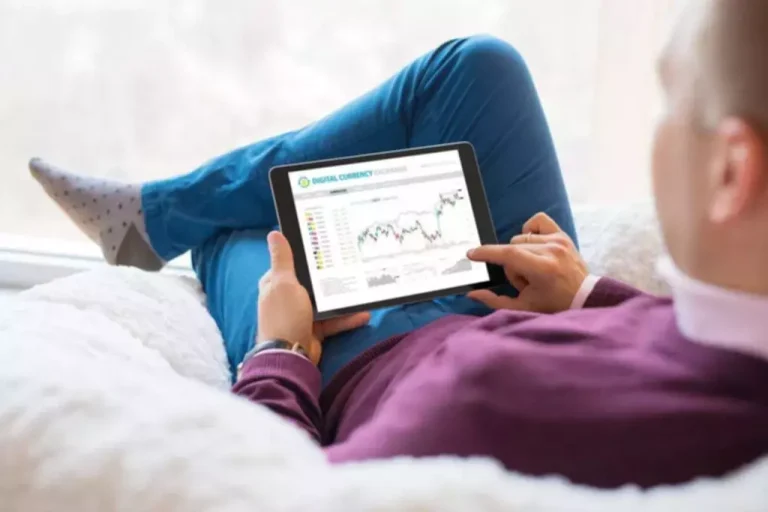
You’ll notice that the forex market has some currency pairs or certain specific currencies that are more volatile than the others. For example, the currencies of emerging markets or exotic currency pairs, usually exhibit more volatility than the major currency pairs or the safe currencies. Volatility, in simple terms, is the measure of how much a currency’s value can change over a given time frame. It is usually calculated using statistical methods such as standard deviation or average true range.
Exotic forex pairs can provide you with an opportunity to diversify your trading. Exotic currencies have a higher level of volatility, which increases the risk of trading them but also offers the chance of finding trading opportunities. Liquidity refers to the speed or ease with which a market can execute trades. Usually, it is defined by the entire spectrum of active traders and trading volumes. The forex market is not only highly volatile but also highly liquid. The high liquidity put forex trading in an advantageous position as it is accessible 24 hours a day during the trading days.
Traders should avoid overexposing themselves to highly volatile currency pairs and limit their risk per trade. Market sentiment, also known as investor sentiment or risk appetite, refers to the overall attitude of traders towards a particular currency pair or the market as a whole. Positive sentiment leads to increased risk-taking and higher volatility, while negative sentiment can result in risk aversion and lower volatility.
Volatility refers to the measure of how much a currency pair’s exchange rate fluctuates over a certain period of time. It is an essential concept in forex trading as it impacts the profitability and risk of a trade. Understanding volatility can help traders make informed decisions and develop effective trading strategies. Being aware of a security’s volatility is important for every trader, as different levels of volatility are better suited to certain strategies and psychologies.
Over $6 trillion worth of trade happens on the forex market daily. You have to assess the price fluctuations over a set period to measure their volatility. For instance, if the exchange rate of a currency pair fluctuates quickly within a short timeframe, it is considered a highly volatile pair. Conversely, if the rate changes slowly over a longer timeframe, its volatility is low. Implementing proper risk management techniques, such as setting stop-loss orders and using appropriate position sizing, is crucial in managing volatility.
A common strategy to deal with volatility is to start small and to select your trades wisely. Never enter a trade with overconfidence because the volatile markets are unpredictable. You must be ready to fine-tune and make changes at the drop of a hat. Use logic and the information from your research to decide and stay focused while tracking your trades.
The US dollar is the world’s reserve currency and the currency of the world’s largest economy, making it a powerhouse in the foreign exchange market. Although US inflation is not stopping at the expected speed, today the US currency presents a kind of refuge from other international currencies. Although US inflation is not stopping at the expected speed, the US currency presents a kind of refuge from other international currencies today. Leveraged trading in foreign currency contracts or other off-exchange products on margin carries a high level of risk and may not be suitable for everyone. We advise you to carefully consider whether trading is appropriate for you in light of your personal circumstances.
Volatility is a critical aspect of forex trading that can significantly impact a trader’s profitability. By understanding the factors influencing volatility and its implications for trading strategies and risk management, beginners can make more informed decisions and navigate the forex market more effectively. It is essential to stay updated with economic indicators, geopolitical events, and market sentiment to gauge potential volatility and adjust trading strategies accordingly.